
The Securities and Exchange Board of India (SEBI) has issued
a circular revising the framework on categorisation and rationalisation
of mutual fund schemes. The circular supersedes clause 2.6 of Chapter 2 of
the Master Circular for Mutual Funds dated June 27, 2024.
SEBI’s updated categorization framework underscores its commitment to investor protection and market integrity. As financial products grow more sophisticated, regulatory clarity becomes essential to maintain trust.
The revised framework introduces updated norms for scheme
classification, structure, and disclosure to enhance clarity, transparency, and
uniformity across mutual fund offerings.
The
revised framework aims to:
· Strengthen transparency and comparability of mutual fund schemes
· Reduce investor confusion arising from similar or overlapping products
· Promote standardisation in scheme disclosures and descriptions
· Align mutual fund offerings with evolving investor needs and market practices
Mutual funds will be required to align their existing and new schemes with the revised categorisation and rationalisation framework as specified by SEBI.
SEBI has created a new
category of lifecycle funds and discontinued solution-oriented schemes such as retirement and children's funds. Fund houses are now allowed to offer both value,
and contra funds, subject to a 50% portfolio overlap cap, with similar limits
also applied to sectoral and thematic funds.
1. Scheme Categories and Characteristics
The
circular provides a revised structure for categorisation of mutual fund
schemes and prescribes detailed characteristics for each category. It
aims to ensure that schemes within a category follow clearly defined investment
objectives and portfolio composition norms.
2. Uniform Description of Schemes
To
promote consistency and improve investor understanding, SEBI has introduced
a uniform description framework for mutual fund schemes.
Asset
Management Companies (AMCs) are required to present scheme information using
standardised descriptions, ensuring that investors can easily compare schemes
across categories.
3. Portfolio Overlap Norms
The
revised framework prescribes norms to minimise portfolio overlap among
schemes within the same mutual fund. These measures are intended to:
· Prevent duplication of similar schemes
· Ensure clear differentiation in investment strategies
· Enhance transparency for investors
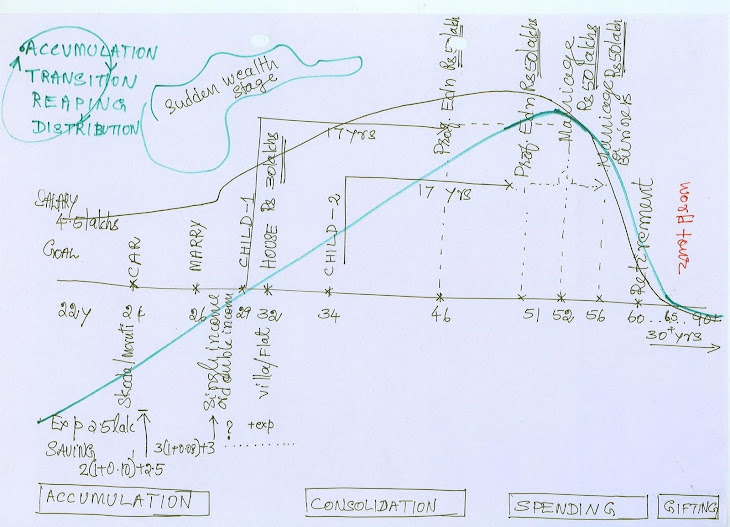
4. Framework for Life Cycle Funds
SEBI
has introduced a structured framework for Life Cycle Funds,
enabling product offerings aligned with investors’ age and risk profiles.
This
framework seeks to provide long-term, goal-based investment options with
defined asset allocation strategies over different life stages.
5. Standardised Framework for Fund of Funds (FoF)
A
standardised regulatory framework has also been prescribed for Fund of
Fund (FoF) schemes, covering:
· Categorisation and structure
· Investment parameters
· Disclosure norms
· Portfolio construction requirements
Peep into the Changes
SEBI
has revised the mandatory minimum investment limits for several equity fund
categories. Previously, many funds were required to invest a minimum of 65% in
equity. This limit has now been raised to 80% for specific
categories to ensure they stay true to their investment objective.
A. Minimum Equity
Allocation Raised to 80%
SEBI has increased the mandatory
minimum equity exposure from 65% to 80% for the
following categories:
- Dividend Yield Funds
- Value Funds
- Contra Funds
- Focused Funds
- ELSS( Tax Saver Funds)
This ensures that these schemes
remain truly equity-oriented and aligned with their stated investment
objectives.
Other Categories:
- Large Cap Fund: Minimum 80% in large-cap
stocks.
- Mid Cap & Small Cap Funds: Minimum
65% in their respective categories.
- Flexi Cap Fund: Minimum 65% in equity.
- Multi Cap Fund: Minimum 25% each in
Large, Mid, and Small caps.
- Large & Mid Cap Fund Minimum 35% each in
Large and Mid caps.
Value and Contra
Funds Together:
Previously, a fund house (AMC) could offer either a Value Fund or a Contra Fund, but not both. Under the new
rules, AMCs can offer both categories, provided
the portfolio overlap between the two schemes is not more than 50%.
B. New Rules on Portfolio Overlap
To
prevent different schemes from looking the same (a practice often called
"closet indexing"), SEBI has introduced stricter overlap norms.
- The Rule: For Sectoral and Thematic
equity categories, no more than 50% of the
portfolio can overlap with other equity schemes (except Large Cap funds).
- Calculation: This
overlap will be calculated on a quarterly basis using daily portfolio
values.
- Timeline: Existing
schemes have 3 years to
comply with this rule. If they fail to meet the criteria after 3 years,
they must be merged with other schemes.
- Transparency: Fund
houses must now disclose portfolio overlap levels on their websites
monthly.
C Introduction of
"Life Cycle Funds"
SEBI
has introduced a brand new category called Life Cycle
Funds.
- These
are open-ended schemes with a "target maturity" date. They
follow a glide path strategy,
meaning the fund starts with higher equity exposure and gradually shifts
towards safer assets (like debt) as the maturity date approaches.
- These
funds can have tenures ranging from 5 to 30 years.
- An
AMC can launch a maximum of six such funds.
- To
encourage long-term holding, these funds carry graded exit loads:
- 3%
if redeemed within 1 year.
- 2%
if redeemed within 2 years.
- 1%
if redeemed within 3 years.
D. Other Important Changes
- Naming Norms: Schemes
must have uniform names that align strictly with their category. SEBI has
barred the use of names that emphasise only return potential to ensure
investors are not misled.
- Gold &
Silver in Equity Funds: Equity funds can now hold small
portions of Gold, Silver, REITs, and InvITs to better manage liquidity.
- Foreign
Securities: These
will no longer be treated as a separate asset class.
The Final Version of Classification
Under the revised framework, mutual fund schemes are
broadly classified into five categories:
1.
Equity Schemes
These schemes predominantly invest
in equity and equity-related instruments.
2.
Debt Schemes
These focus primarily on debt and
debt-related instruments.
3.
Hybrid Schemes
These invest in a mix of asset
classes, including equity, debt, InvITs, and commodity-related instruments, as
permitted by SEBI.
4.
Life Cycle Funds
These are structured to adjust
asset allocation based on the investor’s age or time horizon.
5.
Other Schemes
This includes:
- Fund of Funds (FoFs)
- Passive Schemes such as Index Funds and Exchange
Traded Funds (ETFs)
The revised framework also
clarifies the meaning of “residual portion”—the part of a scheme’s corpus not
invested in its core asset classes as defined in its mandate.
For investors, the message is
clear: understand the category, review the mandate, and ensure your investment
aligns with your financial goals and risk appetite.
In a dynamic market environment, structured regulation is not a constraint—it is a safeguard.
Those who read this also read:
1. SEBI Categorisation of MF Products

